

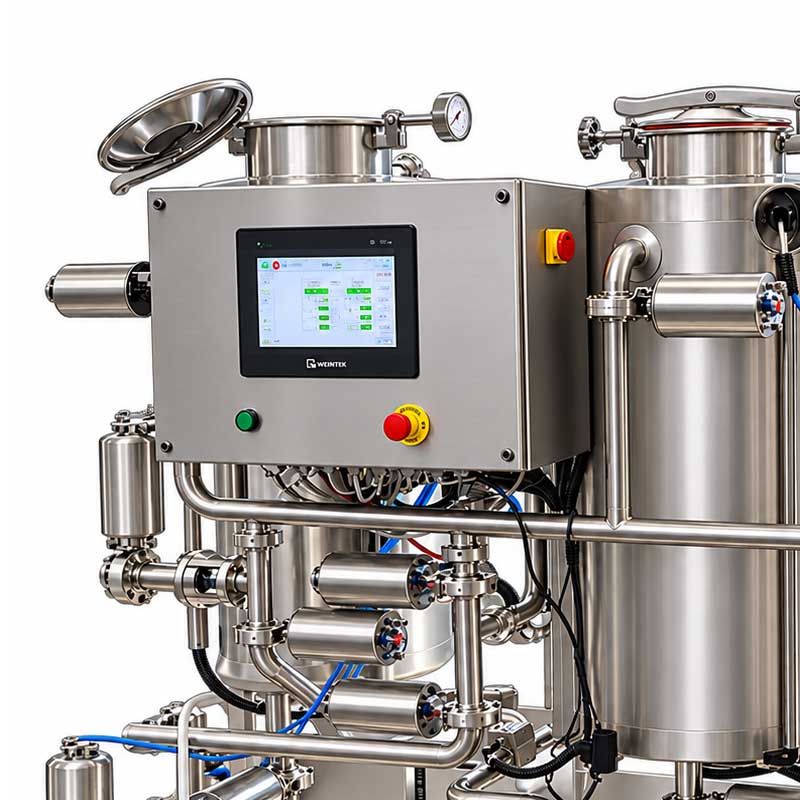
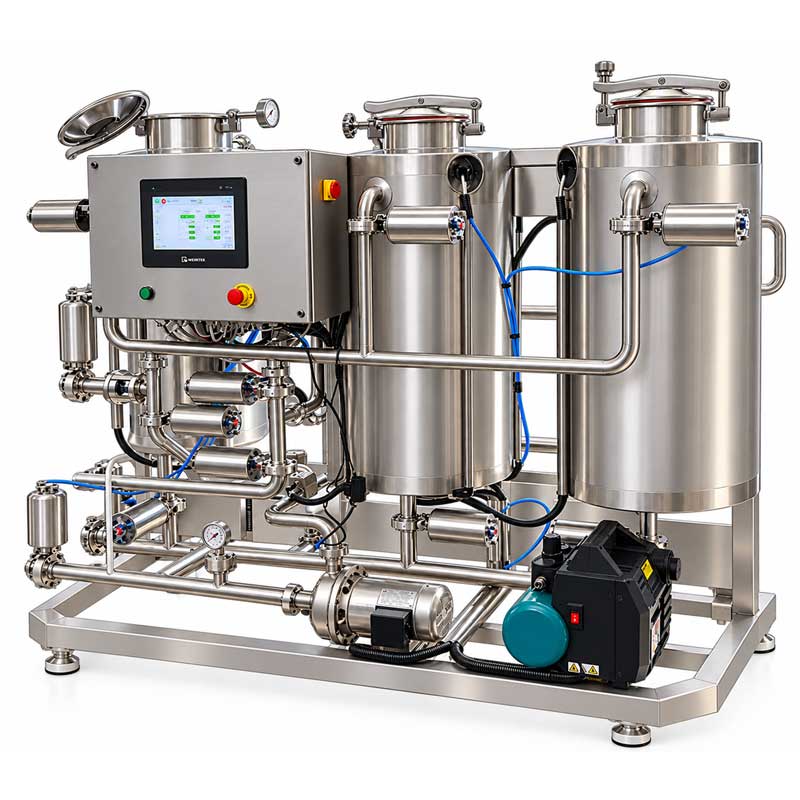


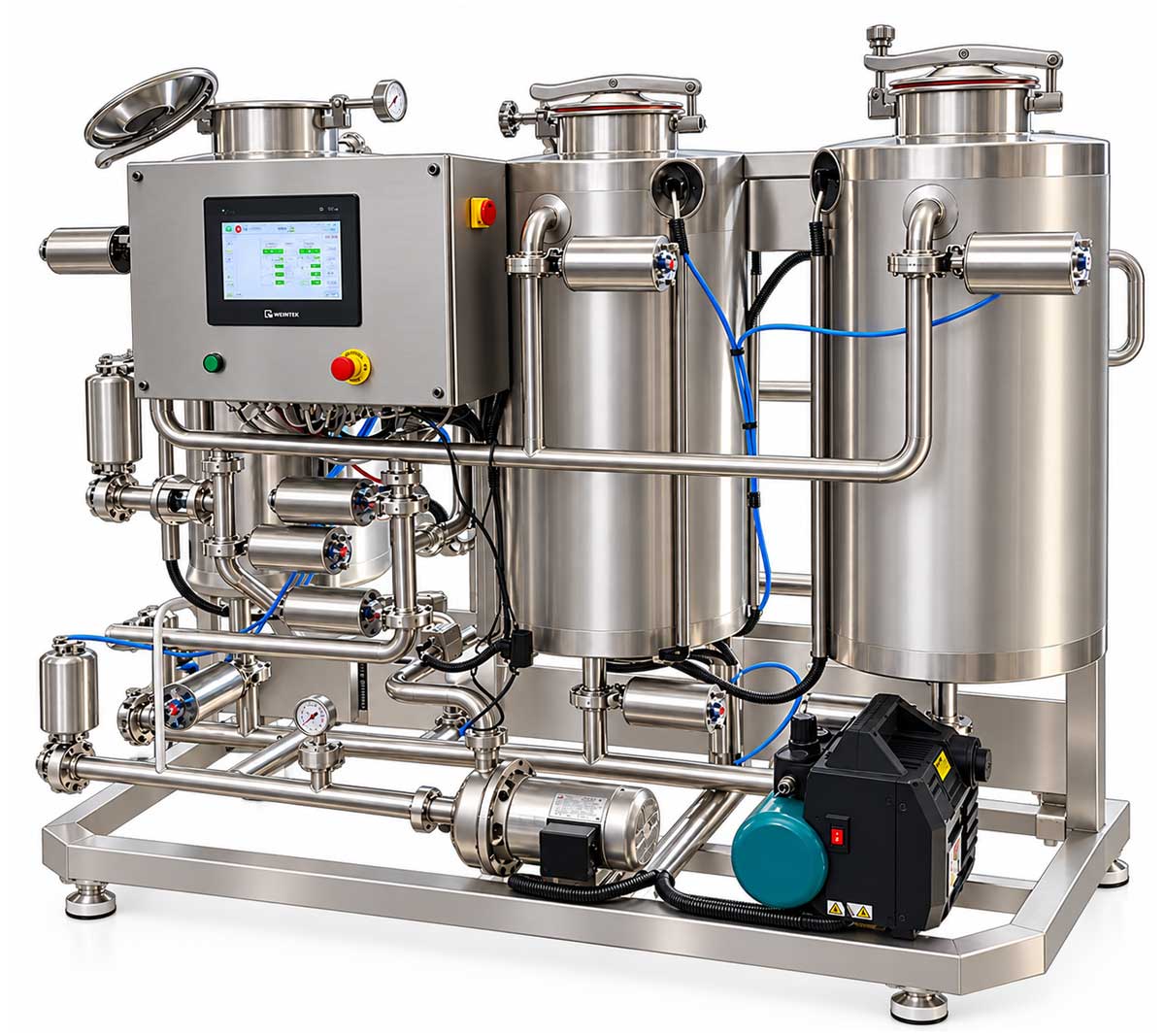
Description
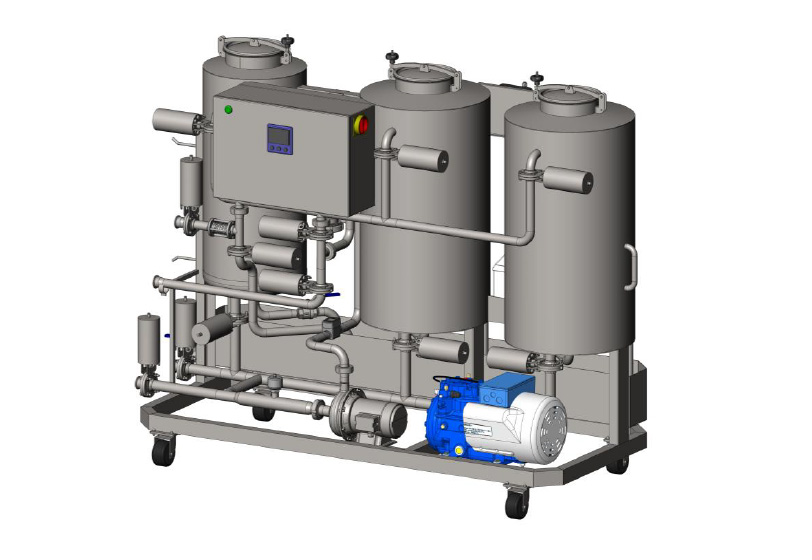
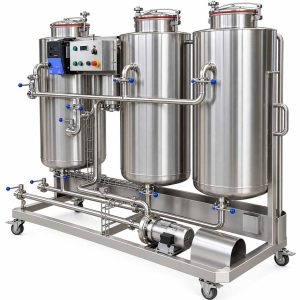
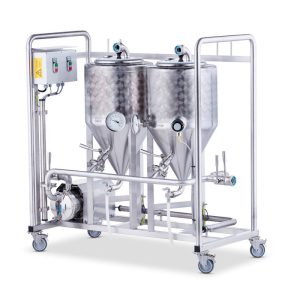
CIP-AM3 is an automatic control system for the mobile Cleaning In Place systems with three tanks. The automatization includes all functions necessary to perfect cleaning and sanitation of all containers and optionally also pipes and hoses in a brewery using a special program, sensors, motorized valves and PLC industrial computer with the no-touch display. This control system is compatible only with the CIP-103 and CIP-203 machines.
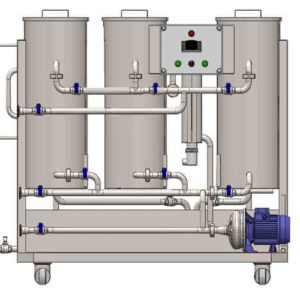
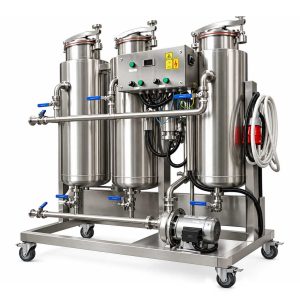
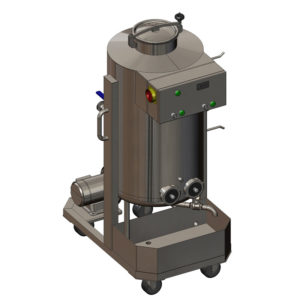
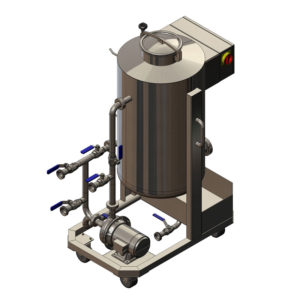
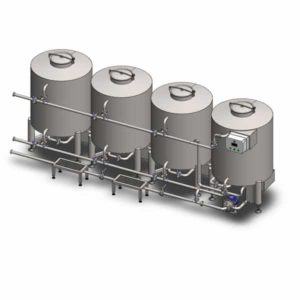
Dimensions and equipment of the CIP-103 + AM3 (Automatic control system) :
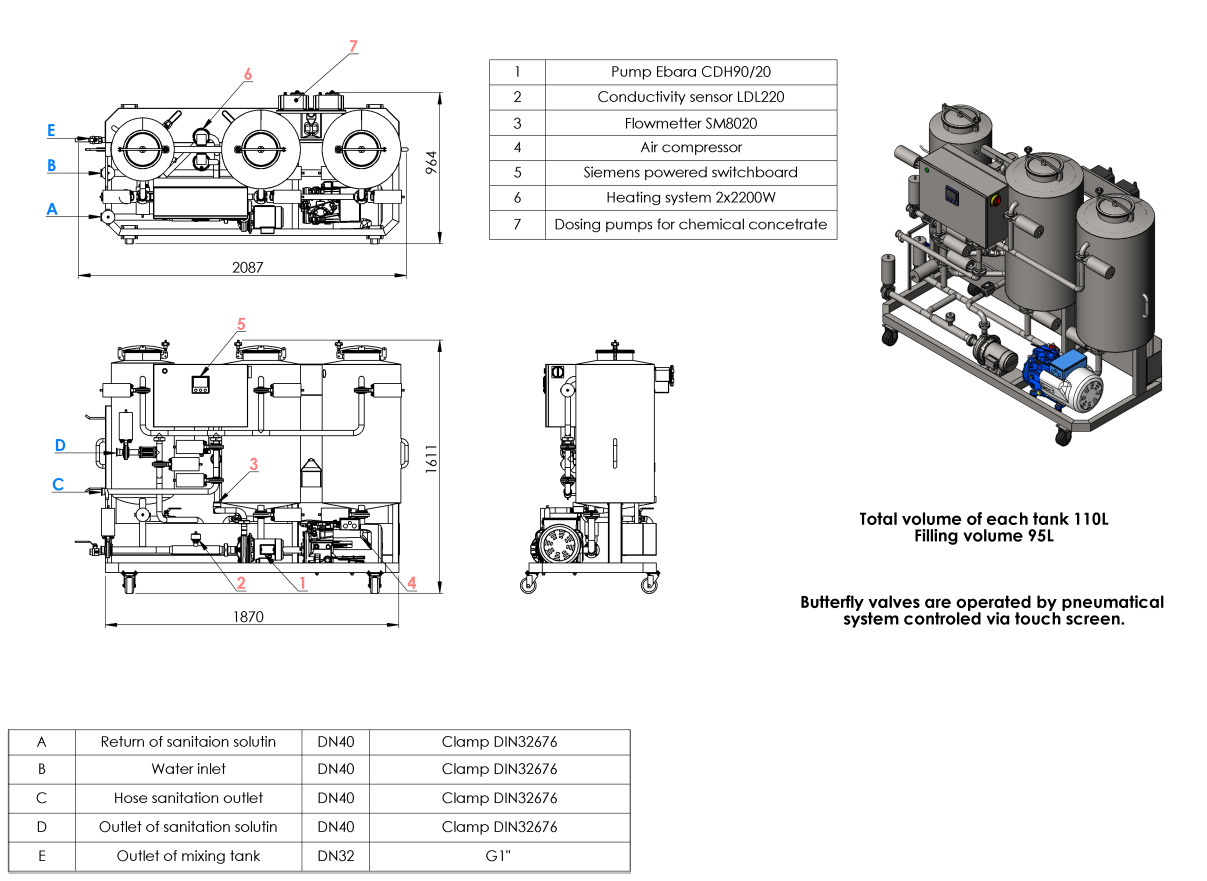
The automatic control system includes :
I. Hardware
- PLC processor unit : Siemens Simatic S7-1200
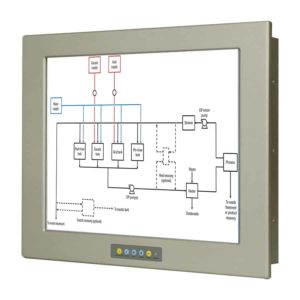
- Display : Weintek display 10“ (touch display)
- Frequency converter – Invertek E3
- Siemens powered switchboard
- Flowmeter – SM8020
- Motorized valves – 9pcs of servovalve 1″ + 3pcs of servovalve 5/4″
- Thermo sensors – 1pc of PT100
- Conductivity sensor – LDL200
- Full pipe sensor – IFM LMT100
- Level sensor – 3pcs of INDCOM SF141
- Induction flow meter – IFM SM8120
- Emergency stop button
- Dosing peristatic pumps – 2pcs
- Cable set – IFM
- Holders the storage canisters with concentrated chemicals – 2pcs
II. Software (manual and automatic operations) :
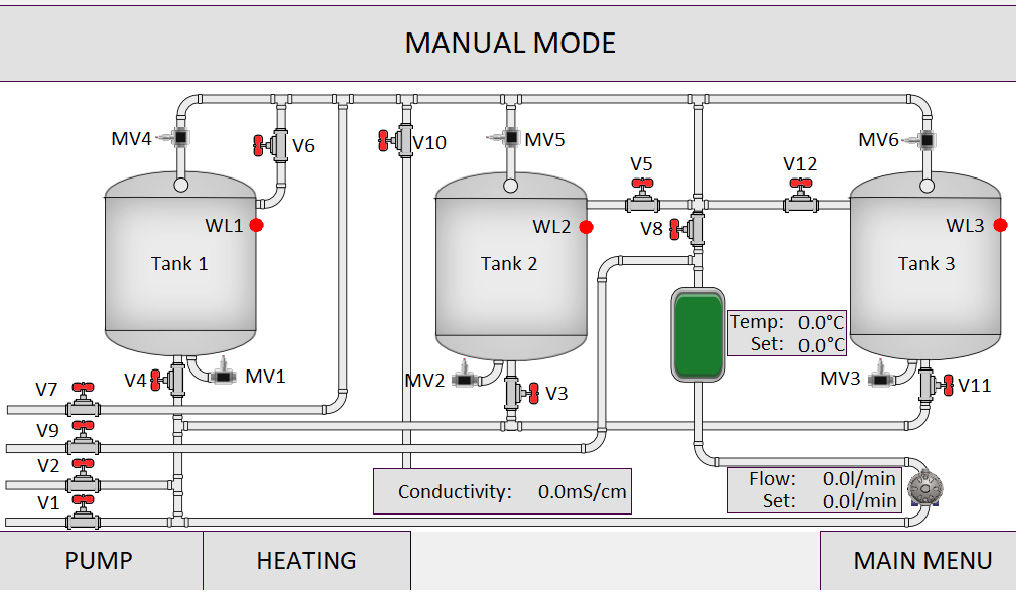
Manual operations :
- Self cleaning of the CIP station (if the machine is equipped with the optional equipment for the self cleaning)
- Sludge removal from the CIP tanks
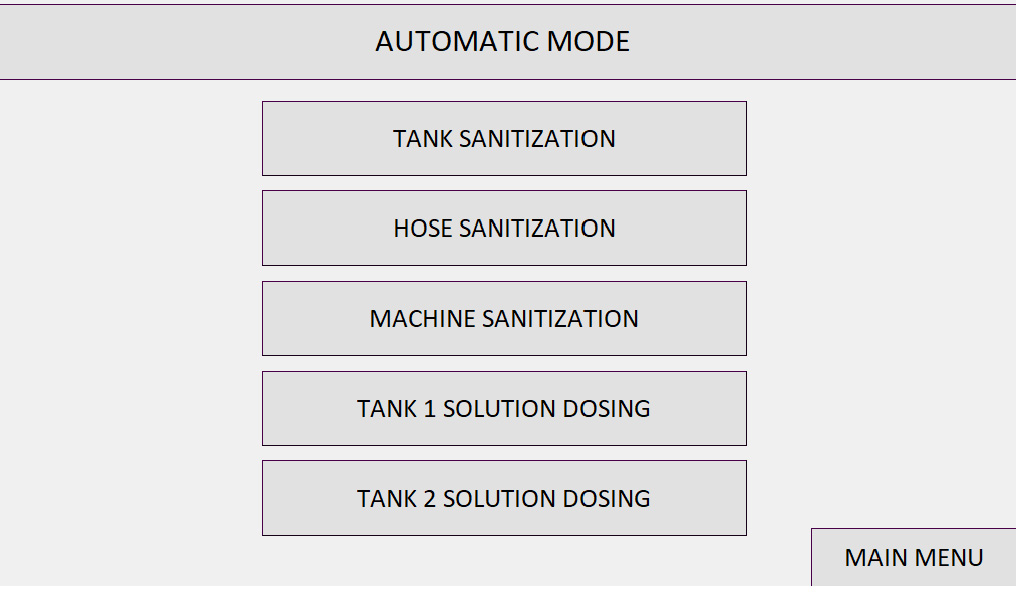
Automatic operations :
- Automatic keeping of the sanitizing solution level in the tanks
- Automatic dosing of the concentrated chemicals from canisters to the tanks
- Automatic keeping of the sanitizing solutions quality during the cleaning process
- Automatic heating and keeping the chemical solutions at required temperature
- Automatic rinsing cycle – with water (if a water hose is connected)
- Automatic cleaning cycle – with chemical solutions from the tanks
- Automatic venting when sanitizing solutions circulate
- Automatic flushing-through of the pipe system
- Automatic cleaning and sanitizing of the pipes and hoses (optionally, if the machine is equipped with th optional equipment for cleaning the hoses and pipe lines)
- Sensing and checking the quality of the sanitizing solution
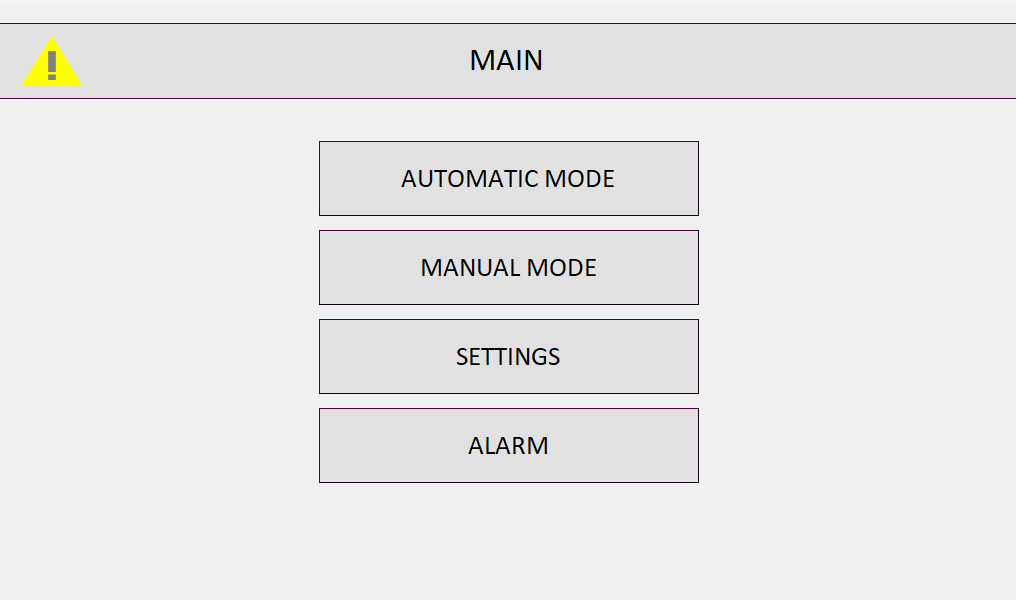
Main menu :
Manual mode :
Automatic mode :
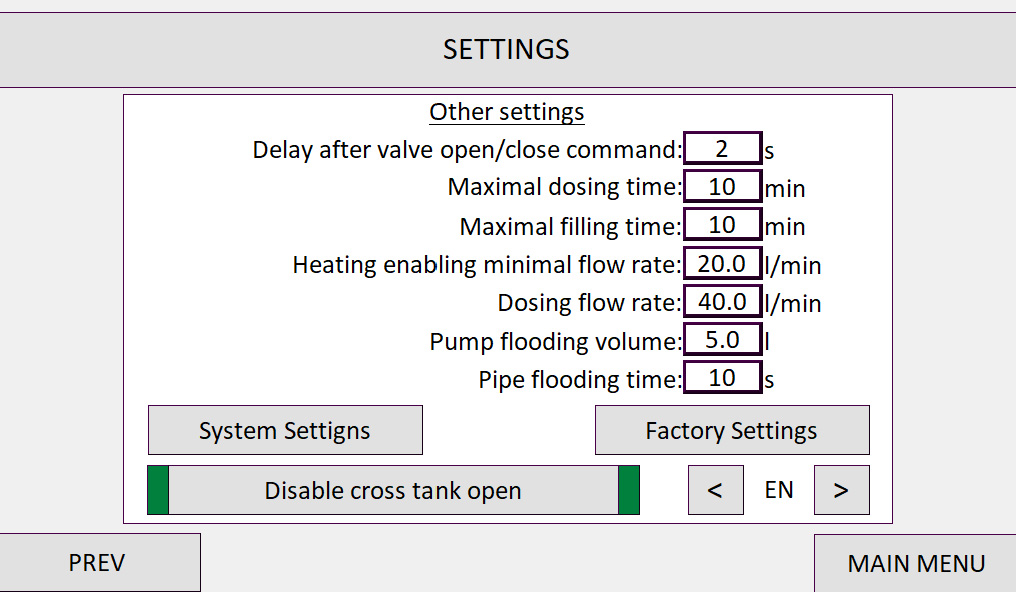
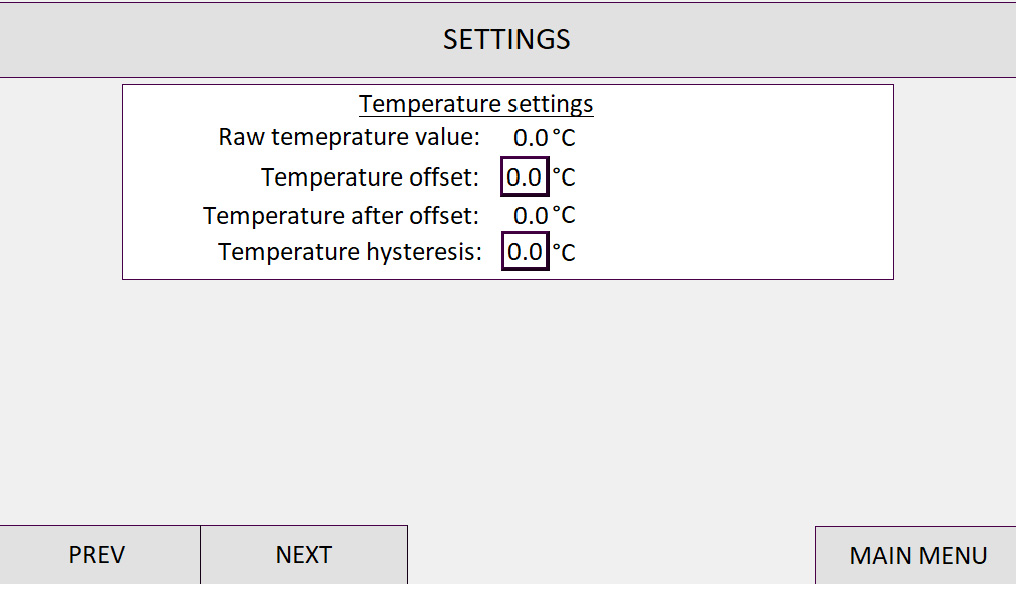
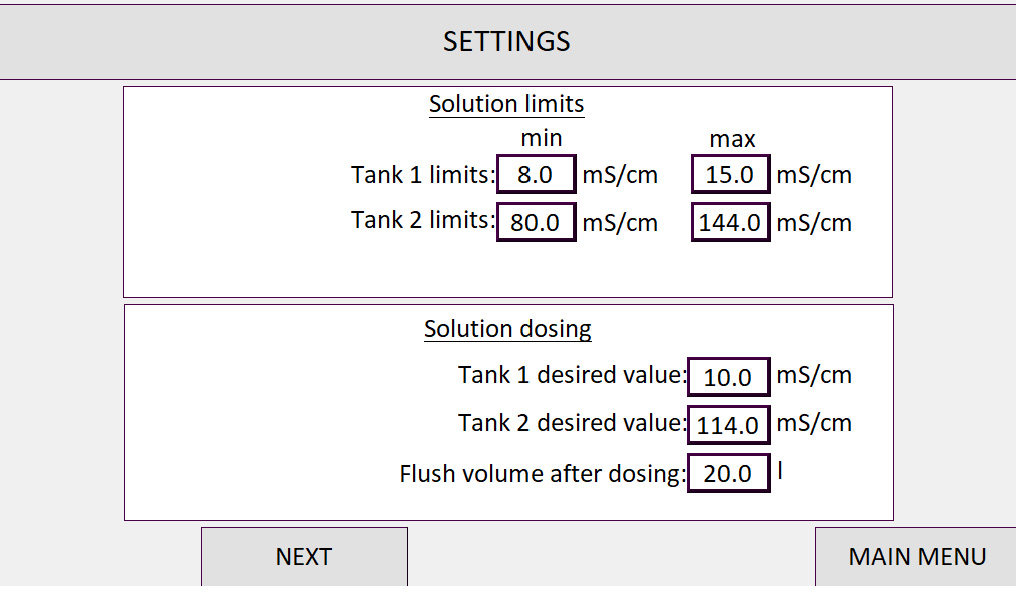
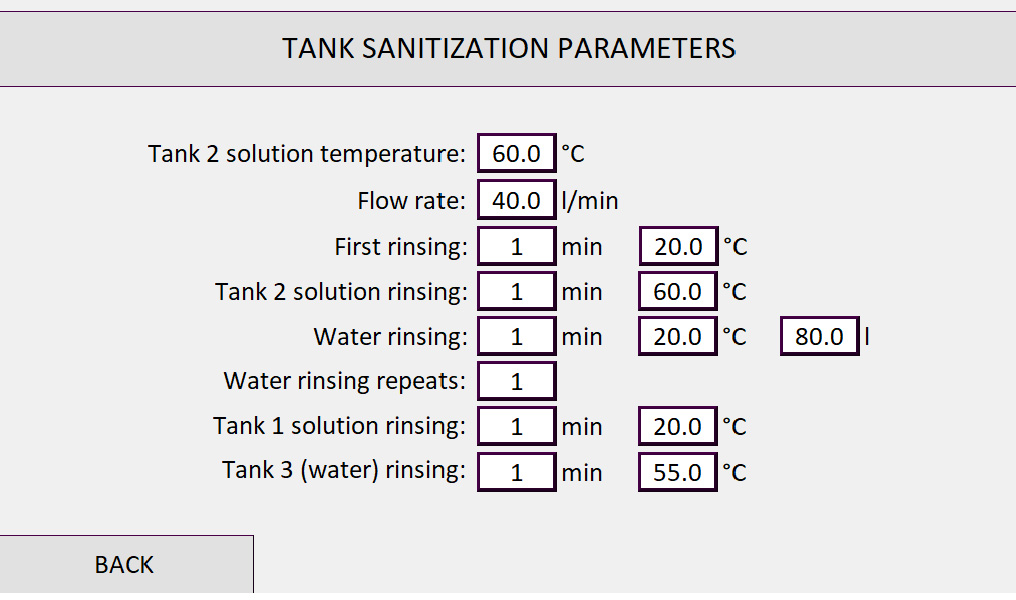
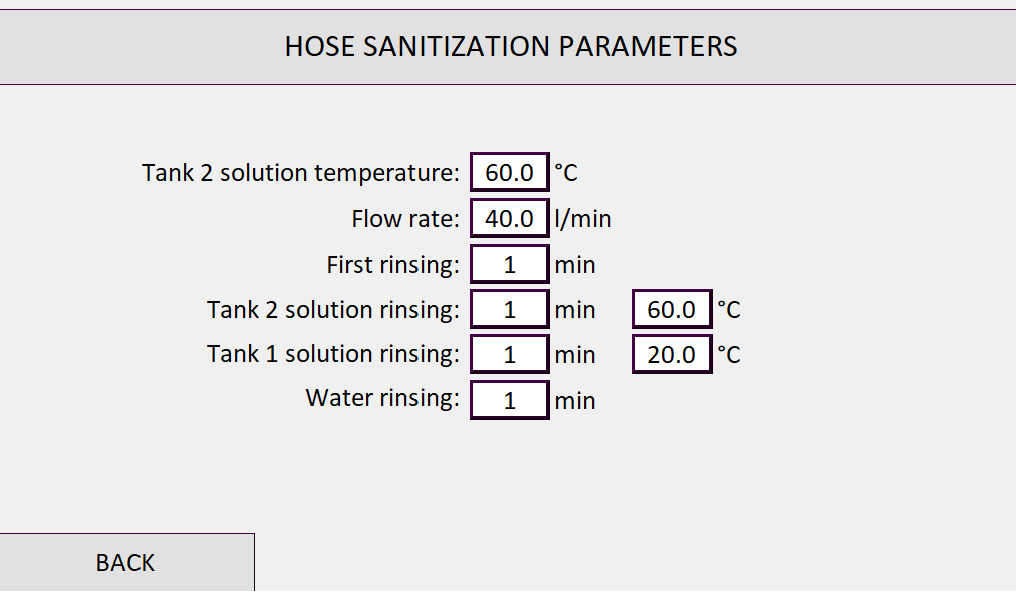
Setting menu :
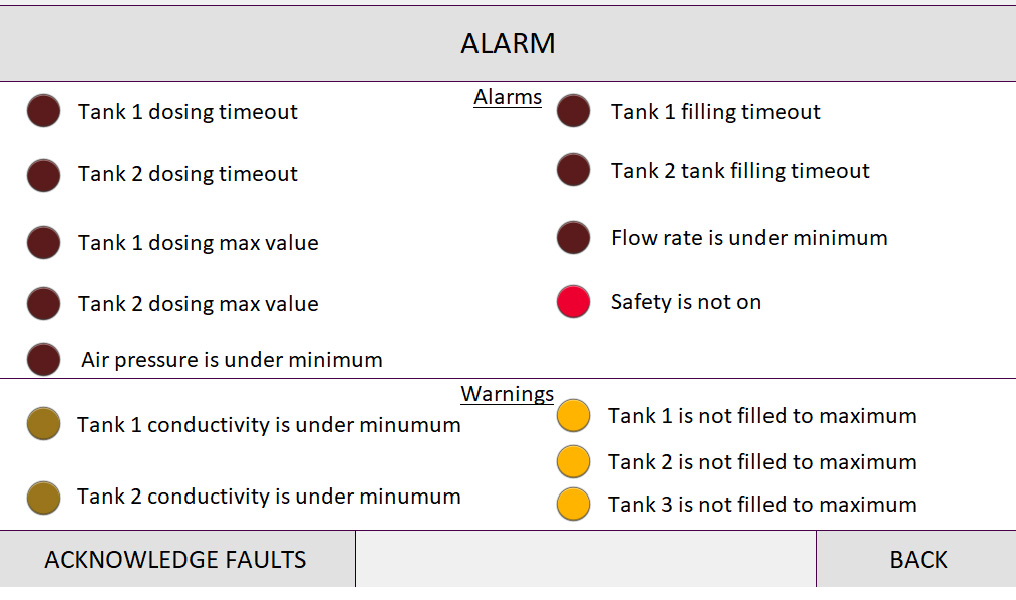
Alarms :
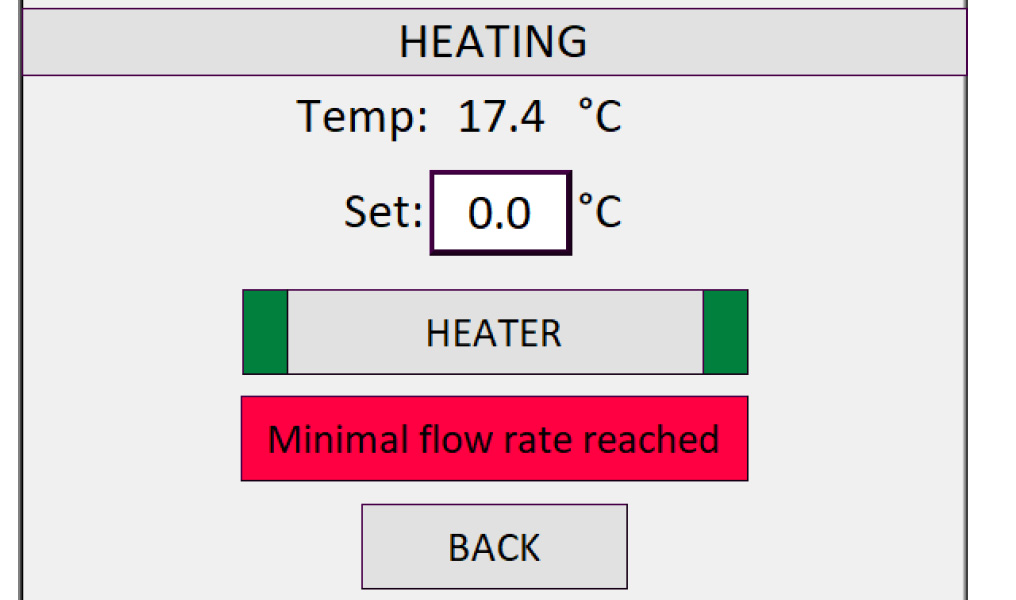
Heating control :
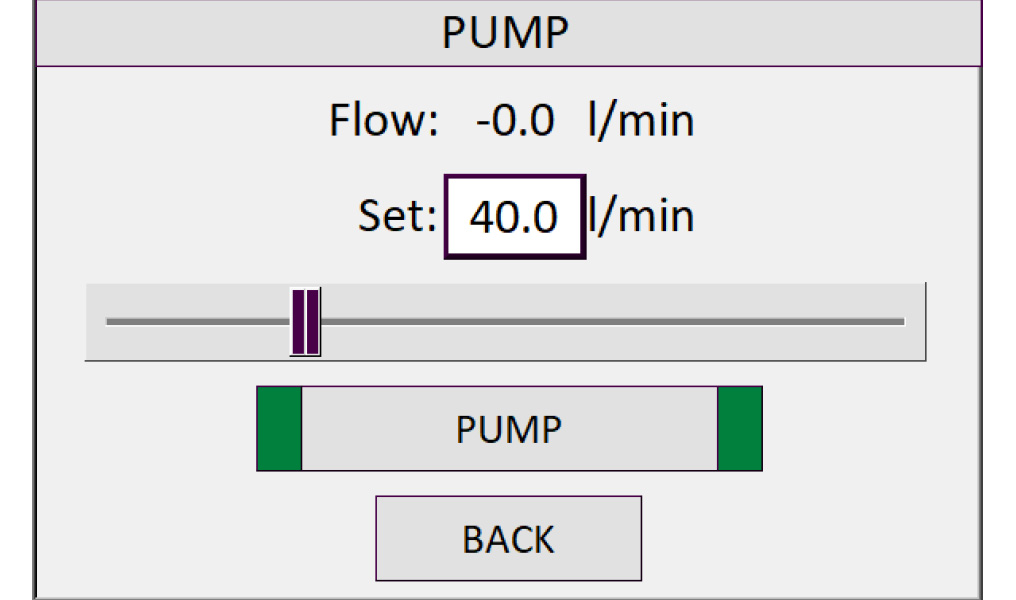
Pump performance control :
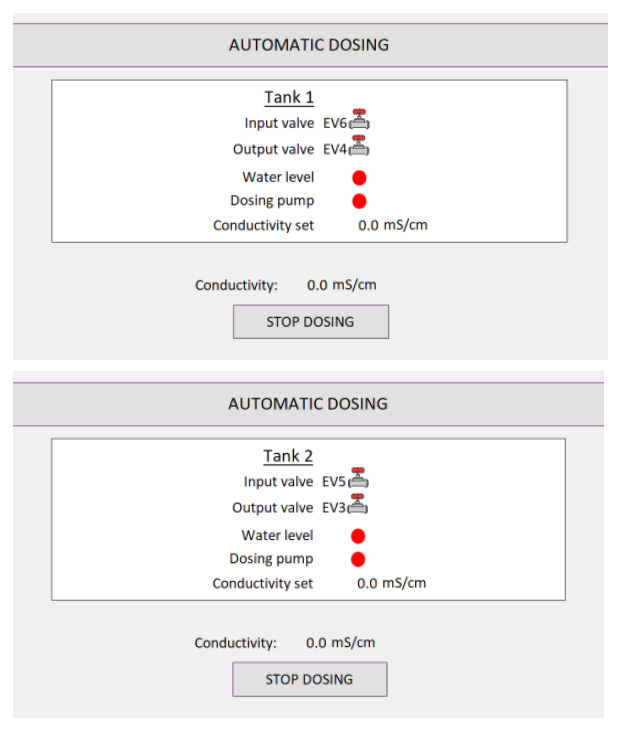
Automatic dosing chemicals :
Frequently asked questions :
Q : Do I have to program something or is everything already programmed to start based on what I sent you?
A: Everything is already programmed by us. The basic times and temperatures are set, so the unit can be used immediately.
Q : So if so, do I select a cleaning program and everything will happen automatically, or do I have to fill the tanks with water first?
A: After switching on the CIP, the HMI will ask whether the solutions should be prepared – that is, let the water in and dose the chemical solutions to the appropriate concentration. This process can then be started independently in the automatic processes menu.
Q: Will the CIP station automatically start filling with water, both chemical solutions will be diluted automatically and then the heating will start and the cleaning cycle will start by itself?
A: Yes, the preparation cycle will start after switching on the device.
Q : If I need to achieve a different desired concentration of chemical solutions in the tanks, how should I proceed? Where do I enter the desired concentration of alkali and acid?
A: In the manual, in chapter 7, there is a screenshot of the screen showing the conductivity values for the left and right tanks. Here the operator sets the desired conductivity and can also set limits.
Q: What happens if the concentration of chemical solutions decreases during cleaning? Will CIP stop cleaning and add concentrates to the solution or do I have to do it myself?
A: Solutions are prepared before starting the sanitation cycle. During the sanitation cycle, the conductivity will decrease depending on the tank contamination, etc. But it is not possible to pause the sanitation cycle and restart the solution preparation. If we take a model example of tank sanitation – preparation of solutions (concentration + temperature) and subsequent start of the cycle. The tank is first rinsed with water several times and then the sanitation solution is pumped into it and a closed circulation cycle begins. If I wanted to pause the cycle at this point and re-dose the solutions, I would have to pump all the solution back into the tank and start dosing. This does not make sense. The concentration of the solution will not drop so radically that it must be dosed again. However, if the operator determines that the conductivity (concentration) has dropped, he can repeat the sanitation process.
Q: I do not understand what the conductivity meter actually shows and how to work with it.
A: The conductivity meter shows the conductivity of the sanitation solutions. Depending on the type of sanitation solution and temperature, it is necessary to find out what conductivity the solution should have. For example, for a NaOH solution (lye) with a concentration of 2% at a temperature of 60°C, the conductivity is 120 – 140 mS/cm. For this reason, the conductivity value for an insulated tank is set to 114 mS/cm by default. So it really depends on what sanitation solutions you want to use, at what temperatures and in what concentrations. You then have to adjust the conductivity value yourself. The concentration of sanitation solutions, whether acidic or alkaline, must not exceed 5% (It is limited with used materials).
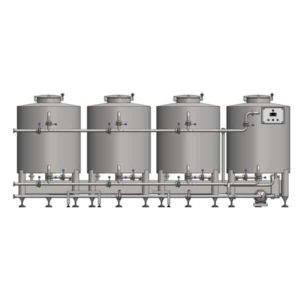
Designed only for :




Reviews
There are no reviews yet.